

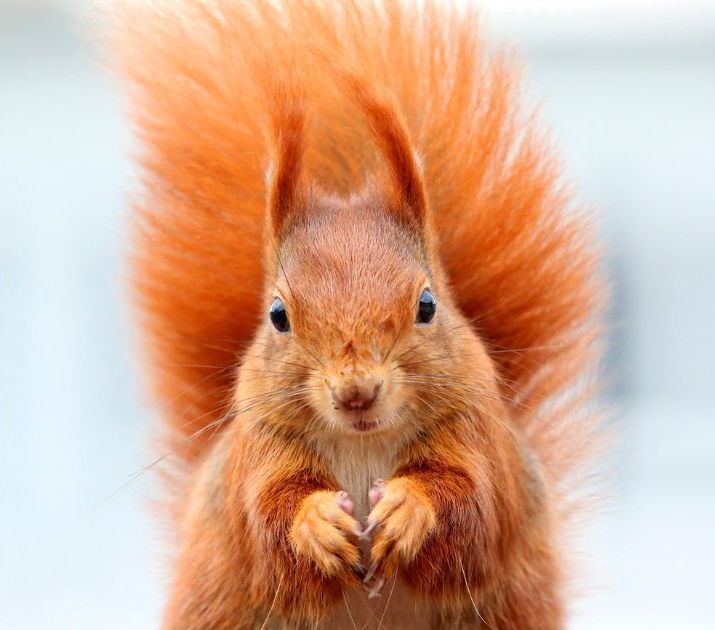
High up in the European treetops, a blur of red fur flitting between branches - that's the Eurasian red squirrel (Sciurus vulgaris), a fascinating resident of our forests. These lively creatures, unlike their North American counterparts, lead lives full of activity and unique adaptations. Let's delve into the world of these bushy-tailed acrobats and explore their remarkable behavior.
Diurnal Dynamos:
Unlike owls and bats, European squirrels are diurnal, meaning they're most active during the day. Their mornings and late afternoons are spent in a constant flurry of activity, searching for food. Keen observers might spot them scampering along branches, their sharp claws providing excellent grip as they navigate the forest canopy.
Master of the Menu:
These squirrels are omnivores, their diet changing with the seasons. In spring and summer, they feast on nuts, seeds, fruits, and insects. As autumn approaches, they become more focused on gathering and storing nuts, like acorns and hazelnuts, for the colder months. This impressive feat of caching ensures they have a food source during the harsher winter.
Solitary, But Not Always:
While generally solitary creatures, European red squirrels can exhibit interesting social behaviors. Their home ranges can overlap, and during the breeding season, males might compete for the attention of a female. Additionally, during periods of extreme weather, several squirrels might share a nest for warmth, showcasing a temporary sense of communal living.
Masters of Movement:
Their agility and skillful maneuvering through the trees are truly remarkable. They can leap impressive distances, use their tails for balance, and even descend headfirst down tree trunks! These adaptations are crucial for escaping predators, such as hawks and martens, who share their forest home.
A Crucial Role in the Ecosystem:
European red squirrels play a vital role in maintaining the health of the forest ecosystem. By burying nuts, they inadvertently plant trees, promoting forest regeneration. Additionally, their seed dispersal helps ensure the diversity of plant life.
Threats and Conservation:
Sadly, the introduction of the non-native Eastern gray squirrel has posed a threat to the European red squirrel in some areas. The gray squirrel outcompetes the native species for resources and can carry diseases that are harmful to the red squirrel population. Conservation efforts are crucial to ensure the continued survival of these fascinating creatures in their European homeland.
Next time you're strolling through a European forest, keep an eye out for the red squirrel's tell-tale flash of fur. Observing these busy and adaptable animals provides a glimpse into the dynamic world of our forest ecosystems.
Watch this cute NatGeo video: https://youtu.be/6oAAFLVeqKE?si=1RNikMI9o60TTZk-
